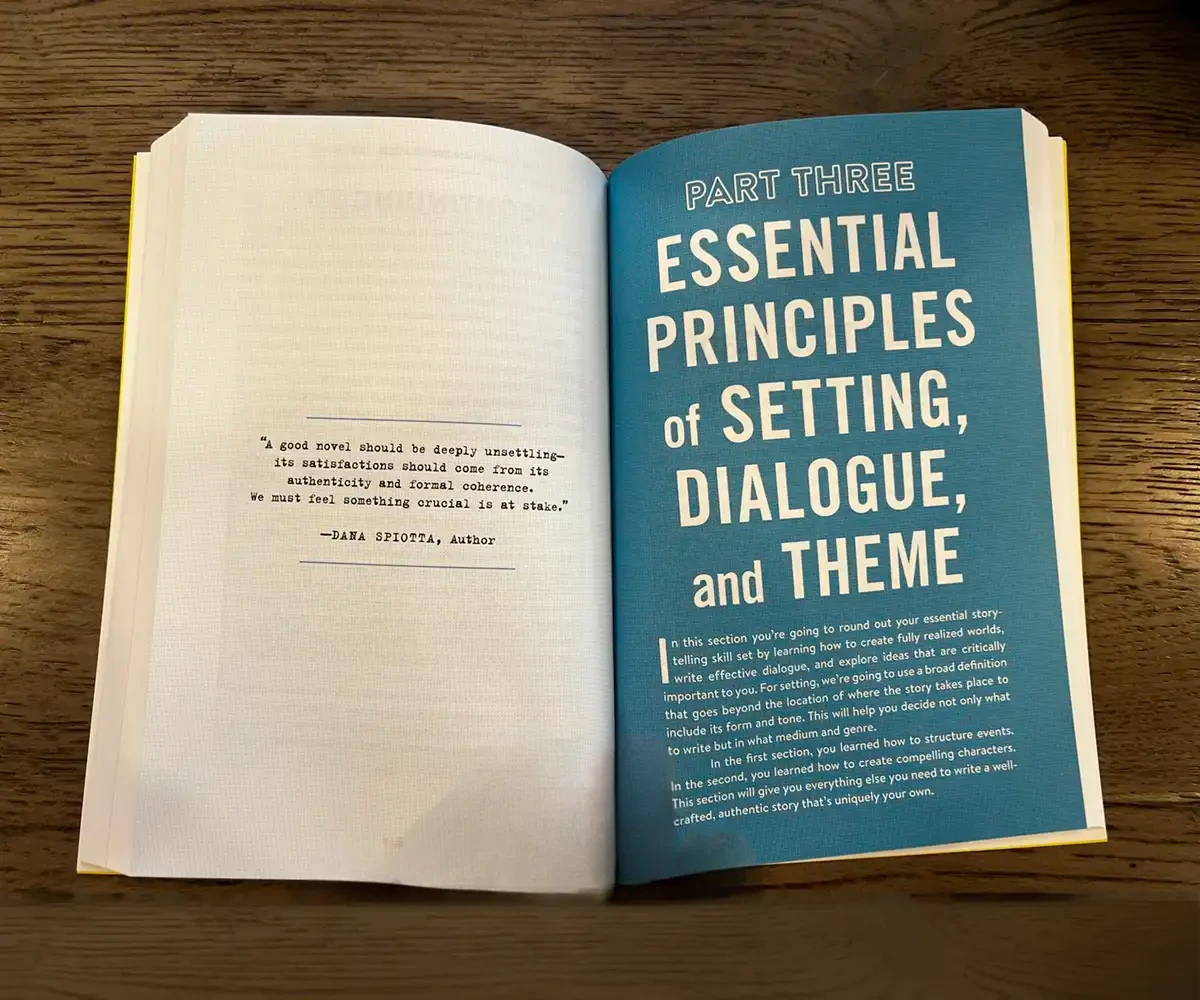
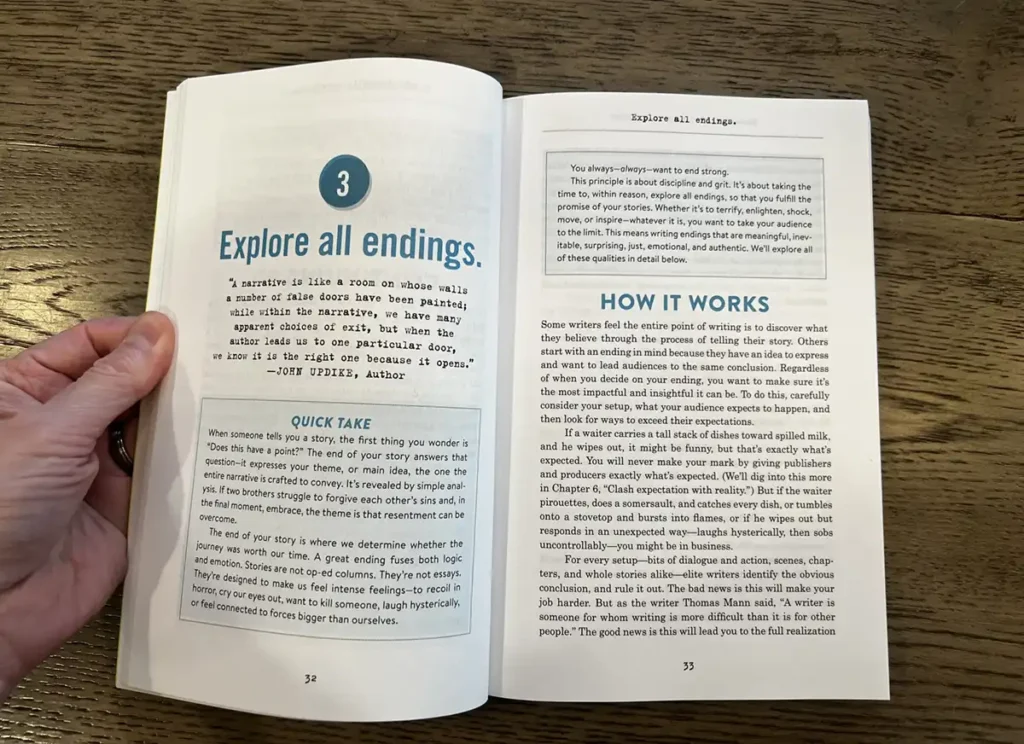
Book cover: 27 Essential Principles of Story

“Read – and then re-read – this elegant exploration of storytelling.”

Tracy Letts

Pulitzer Prize-winning playwright
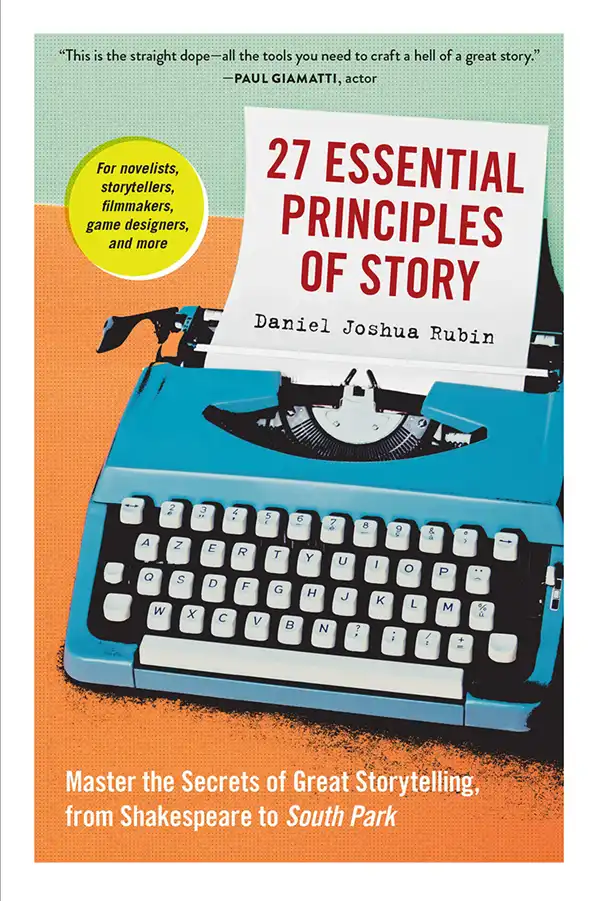
“All the tools you need to craft a great story.”

Paul Giamatti

Emmy Award-winning actor
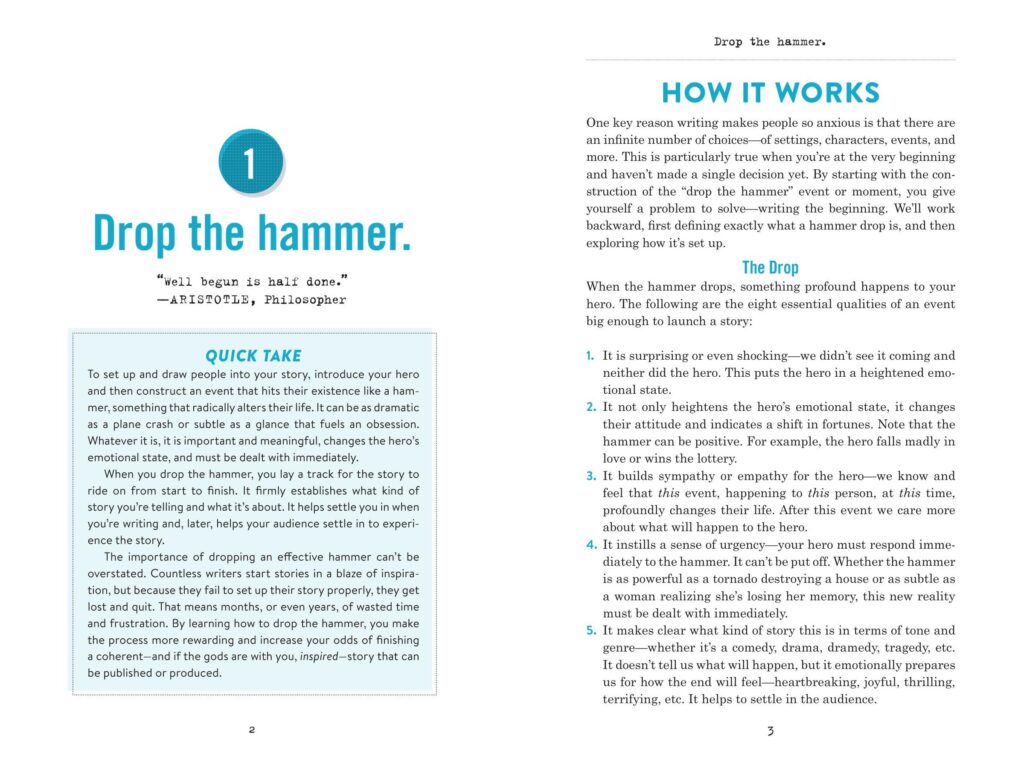
Book cover: 27 Essential Principles of Story

“Read – and then re-read – this elegant exploration of storytelling.”

Tracy Letts

Pulitzer Prize-winning playwright

“All the tools you need to craft a great story.”

Paul Giamatti

Emmy Award-winning actor

Story Principles are the building blocks of Story. Master them and you master the craft of storytelling.

This powerful book and the Story Principles Writing Course will teach you a Total Writing System that is comprehensive, easy to learn and rivals the finest creative writing programs in the world.

STEP 1: Purchase your copy of 27 Principles…

STEP 2: Take the Story Principles Writing Course…

Buy the book – the course’s textbook – and then enroll in the class. It’s FREE and broken down into seven common-sense modules.

1

Story Selection

Learn how to decide what to write so your story is authentic and has all you need to finish it.

2

World-building

Learn how to create richly-detailed worlds that are uniquely your own and help develop your characters and themes.

3

Character Design

Learn how to create characters that have the depth needed to carry your story from start to finish.

4

Dialogue

Learn how to write dialogue that is dynamic, powerful and makes your scenes come alive.

5

Plot Construction

Learn how to construct plots that are tightly focused, build tension and keep your audience engaged throughout.

6

Theme

Learn how to tell stories that are meaningful so they resonate long after the ending.

7

Execution

Learn a holistic process for building a writing life that endures.

Welcome to Story Principles

10 Benefits of Mastering Story Principles

Learn how to…

1

Feel more confident.

2

Get into flow states – by working on solutions that are challenging but not too challenging.

3

Avoid writerʼs block because you always know what youʼre doing.

4

Have more fun writing.

5

Make lightning strike – inspiration is not an accident, itʼs the result of consistently making intelligent choices.

6

Process feedback because you have the vocabulary to articulate your choices.

7

Increase your odds of publication and production.

8

Analyze stories like a pro.

9

Gain self-respect that comes from doing the real work.

10

Love what you write because your stories are autehntic, well-crafted and uniquely your own.

hand holding book open

Rave Reviews

“Get this book immediately!”

J. Quinton Johnson

Actor (Hamilton

“Dan is a master of narrative craft and his book will help you become one too.”

Adam Davidson

Peabody Award-winning writer/producer (This American Life)

“Daniel Joshua Rubin is the Sensei of Story!”

Andrew Smith

former Head Writer, Saturday Night Live

“I usually hate books like this. But I keep this one on my desk and refer to it often. Dan gets into the nuts and bolts of how Story really works in the most practically valuable way. Strong rec!”

Dana Olsen

Screenwriter, The Burbs, George of the Jungle

“So often people ask me if there’s a book on story I can recommend. This is the one.”

Alexa Junge

Emmy-award winning writer (Friends, Sex and the City)

“I have made it my passion and business to find and read books about creative writing, story structure and how to write. This is one of the best I’ve ever read.” 

Clark Peterson

Oscar-winning producer, (Monster)

MORE REVIEWS

Buy 27 Essential Principles of Story

hand holding book open

Powerful Resources

The course is filled with beautifully designed videos, guides, graphic illustrations and cheat sheets to foster retention and spark inspiration.

A Little More About the Book and Why I Expanded It Into An Online Course

In the age of social media, when writers often feel isolated and exposed to millions of other voices, itʼs easy to become dispirited and overwhelmed. From our earliest ages we are encouraged to make teachers happy, to focus on getting good grades and report cards. In high school weʼre tested and stress out about getting into a good college, then focus on our GPA and earning the degree.

The problem with all this is that it encourages us to focus on things outside of ourselves, things we canʼt control. This poses an extreme danger to writers, epsecially young writers. It trains us to look outside ourselves when writing requires deep trust in our own voices. My book 27 Essential Principles of Story is written with this in mind. It talks to readers in a personal tone that ties the principle to the readerʼs own experience. This is to validate you, the reader, you the writer. It encourages self-validation, which is the one quality I saw in every great writer that I studied. They know who they are. They know what they like. And they write to explore, discover and express, not to win external awards of any kind.

When my publisher, Workman Publishing bought my book, it was originally entitled “Story Master” and meant to be an MFA-level Creative Writing Program in a book. But the book would have been way too long. So I cut the chapters on Story Selection and Execution. Creating this course gave me the chance to put them back in, to create a Total Writing System, one that takes you from idea generation through completion.

If you look closely at the 100s of rave reviews for 27 Essential Principles of Story, and my workshops, and look at the photos of people holding up the book on the “Reviews” page, youʼll feel their passion. I think this is because the principles work, but also, they writing makes people feel respected, validated and more confident.

To get a feel for this personal, direct touch, you can download a free chapter – “Drop the hammer.” This powerful chapter will help you start your story off with a strong foundation. And make it far more likely youʼll finish a work that you love, thatʼs even better in reality than it was in your mind.

About Daniel Joshua Rubin

Daniel Joshua Rubin has written for television (NBC, the WB); new media (The Motley Fool, National Lampoon); and theater (with plays produced at Steppenwolf in Chicago, and off-Broadway in NYC). He has taught dramatic writing at Loyola University, Chicago, and at the University of California, San Diego. Throughout his career he has worked with some of some of the most talented and successful writers and artists, including Emmy Award-winners, Marta Kaufman (Executive Producer, Friends) Bill Prady (Executive Producer, Big Bang Theory), and Tony Award-winner, Anna D. Shapiro (Director, August: Osage County).

Rubin is a dedicated story scholar with a deep interest the role narrative plays in not only fiction, but business, investing, politics, relationships, personal development and the culture at large. Born and raised in Brooklyn, Rubin now lives in Evanston after a decade in Los Angeles. He holds an MFA in Playwriting from the Yale School of Drama, where he graduated with honors and a BS in Drama Studies from the State University of New York atPurchase. He is married to his wife of 32 years, Karen Frederick

Representation: Lisa DiMona, Writerʼs House

FAQs

Answers from the founder

This course is a passion project for me; it’s what I’ve learned through years of studying story academically and personally. It’s the course I wish I had when I was a young writer attending Yale.

There are several things:

  • The course is comprehensive. It takes you from idea generation to building a writing life. It’s a Total Writing System built to rival the most elite writing programs in the world in terms of practical, actionable value. You can pay 100s of 1000s for an MFA at a top school, but they will not teach more than you learn here, FREE.
  • There’s an intuitive logic to the seven modules which fosters retention. You learn ow to decide what to write, build a world, design characters, make them talk, put them into action, fill your story with meaning and then once you know all that, you learn how to execute, to get it done, in the real world – day in and day out.
  • The focus is on you, the writer with a story to tell. This is more than a writing course, it’s an exploration, an experience. The value goes far beyond creative writing. You’ll see the principles playing out in every area of your life – politics, religion, marriage, parenting, business, your history, memories, everything.
  • The principles are written so simply you can apply them immediately to your work.
  • The seven modules cover virtually any problem you face so you can instantly find solutions. No more getting lost, frustrated and quitting. No more doubts.
  • The principles make writing as simple as it can be made – without strangling creativity. For example, the principle of Plot Construction is “Drop the hammer.” It has two easy parts: set it up and drop it down. But there’s unlimited ways to do this. So you get the confidence that comes from knowing you’re setting up your story properly and the freedom to do it your own way.
  • The course is inspired by the way martial arts are taught. You focus on one principle at a time to master it, then you string them together for a kind of creative nuclear chain reaction. When your characters are active and decisive, operate at the top of their intelligence, navigating richly detailed worlds and their dialogue is actionable, great things happen. And that’s executing just a few principles. Imagine what happens when you execute them all.
  • The course is flexible. You can focus on any module or principle as needed. If you’re struggling with a weak, uninteresting hero for example, start with Character Design. Next go to any module that speaks to you in the moment.
  • The course has a soul. Each color, represented by a colored-dragon, has meaning. White (Story Selection) is the blank page; Green (World-Building) represents growth; Orange (Character Design) represents the fire of consciousness and personality; Blue (Plot Construction) represents water – it’s ability to flow and crash as great plots do; Red (Theme) represents the blood that runs through your story, infusing it with meaning and Brown (Execution) represents earth, digging in, getting your hands dirty, getting your story finished so it’s even better in reality than it was in your head.
  • The certificate award ceremonies are so powerful that if you really do the work and listen to the stirring poetry and soaring music, read and composed by a major award winning actor and composer, you may just burst into tears. Ritual counts. It elevates people. When you master a skill of the craft you love you become a different person. You feel more self-assured, confident, in control. You feel like you’re realizing your dream to become a great writer, a true master of your craft.
  • This is a whole different thing. Many will not get this. Some will even scoff! But if you get this, if you open up to it, if you do the work, for real, The Story Principles Writing Course can change your life. No one knows what you could become, not even you

The fundamentals apply to a story that’s as short as a joke or as long as a novel. When you read through the stories in my book 27 Essential Principles of Story, you’ll see how they are executed in novels, short stories, screenplays, TV series, stage plays, graphic novels, comic books, video games, lyrics, and spoken word. And they work in all genres – horror, sci-fi, fantasy, romance, etc.

Not necessary, but nice to have on hand as a physical reference book:

The Textbook

How to Write Good Stories: No Theory, Jargon or Formula

The book offers nothing but practical value. It’s just timeless principles in plain English with adrenaline.

“All the tools you need to craft a great story.”

PAUL GIAMATTI, Emmy Award-winning actor

“Read – then re-read – this elegant exploration of storytelling.”

TRACY LETTS, Pulitzer and Tony Award-winning playwright

Learn more about the book

Both the textbook and the course take you through the fundamentals of writing, but the course takes a deeper dive with graphic illustrations, cheat sheets, and a BONUS checklist. And the course adds 2 extra important sections: 1) Story Selection: how to choose what to write about and 2) Execution, which teaches you how to build a holisitic wring life .

All materials were conceived and written by Daniel Joshua Rubin

Doug Roussin and Connie Nassios did web design and branding. 

Austin Rhett Thompson filmed and edited the videos.

Ken Berry composed the music. 

Chris Manfre did the animation in the award ceremonies. 

Michael Manuel did the voice over in the award ceremonies.